Thursday, April 11, 2019

Fancy Engineering Undergraduate (UG) Courses


Recently I came across some media reports which suggest some new courses launched at undergraduate (UG) level (BE., B Tech) that are likely have huge demand in next five years. Since I doubt that claim, this blog is specifically to express my views on that subject.

Some of the UG courses predicted to have huge demand and job opportunities, in next five years are: robotics, automation, automotive design, data analytics, polymers, biochemical engineering, mechatronics. I would not like to mention any specific course, but try to put forward my view, giving some examples.

Few years back, a new engineering UG course was launched by a renowned university in Maharashtra (India), titled “Instrumentation Engineering”, with much fanfare. At that time, large number of students opted for the course. However, even before the first batch of UG students passed out in that course, it was realised it has very few job opportunities. As a result, many private engineering colleges that initially started the course backed out and closed the Department. In my opinion, any graduate mechanical, chemical or electronics engineer can fulfill the requirement of instrumentation engineer, after a brief initial training.

The story is somewhat similar in case of Bio-Chemical Engineering at UG level. Any UG chemical engineer can work in a biochemical industry, perhaps better, because he is able to take a 3600 view as a chemical engineer. There can be no difference of opinion, if I say mechanical, electrical or electronics engineer can work in robotics, automation, mechatronics and so on.

The point is, the job opportunities shall be much limited for the graduates (BE, B Tech) passing out from narrow engineering courses like biochemical engineering or robotics. To give an example, a chemical engineer graduate can work in biochemical engineering and also in many other chemical industries, but a graduate with biochemical engineering degree will find it difficult or will not be accepted by other chemical industries.

I feel, while choosing the engineering branch, first preference should be given to basic branches like chemical, civil, computer, electronics, electrical and mechanical engineering. It is better to avoid joining UG course with a narrow engineering scope, as discussed above. These subjects should be left for PG (MS, M Tech, ME) qualification.

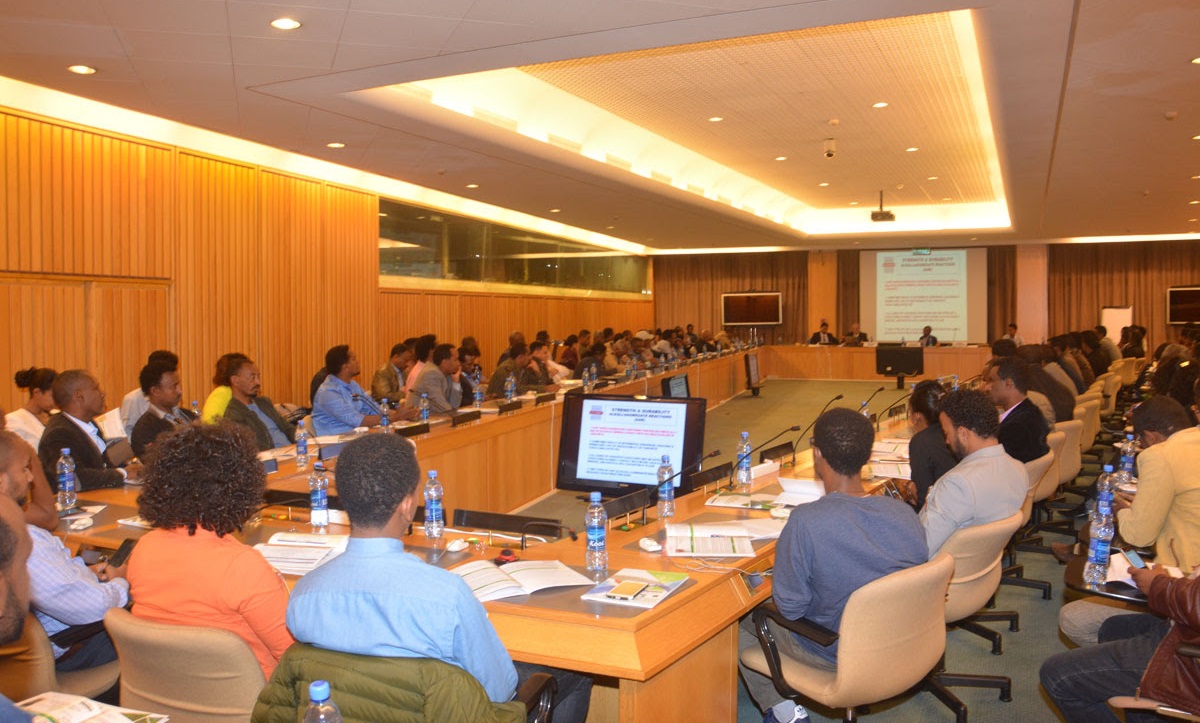
Image Source: CERDEC Math and Science Summer Camp, 2013, US Army, @flickr.com Creative Commons License. 

Visit Dr J D Bapat's website 

View Dr J D Bapat's Brief Bio-data

Send your message to Dr J D Bapat: consult@drjdbapat.com


**

Saturday, March 16, 2019

Adding Value to the Engineering Educational Institutions


Establishing and running an engineering educational institution is a capital intensive project. In India, the main source of income for the private engineering institutions is from the tuition fees collected from the students. The revenue outflow is mainly for salaries, establishing laboratories and the development of college infrastructure.

All promoters wish that their institution should be preferred by the prospective students, to seek admissions. They also desire good faculty should join the institution.   

Over the years, large number of engineering colleges have been established, as the number of students seeking engineering courses was equally large and kept growing, in the past. Since last few years, however, the demand for other faculties like commerce, law has increased. As a result, number of students seeking engineering admissions have not increased in the same proportion vis-a-vis the number of engineering colleges established. Large number of admission seats remain vacant in most engineering colleges, as per the current trend. 

The viability of many engineering institutions has come under threat. These institutions find it extremely difficult to gather resources to pay staff salaries and develop laboratories and infrastructure. The students and parents do not give preference to these institutions due to perceived bad quality. This is despite the fact that some of them have secured very good grades in accreditation by NAAC and NBA.  

Even in this difficult period, it is seen, some engineering colleges and universities are successful filling almost cent percent seats. Why do students and parents prefer these colleges?

Dr J D Bapat helps the institutions solve this juggernaut. As a development professional and the adviser, he helps the engineering institutions build up strength in the following areas: 
  • Resource Generation (other than tuition fess)
  • Marketing and
  • Image Building
Dr Bapat, advises the institutions how to build on own strengths. He helps faculty propose research projects to funding agencies and also set up research laboratories. He also identifies areas in which collaboration with the industry could be initiated. Marketing is always with respect to the product. Pass out degree holders are the products of engineering institution. The industry employing the fresh engineers on the one hand and the students seeking admission to the institution, on the other, are the customers. Dr Bapat gives systematic plan to market the achievements of the institution and also to build the image in the society. All these efforts are focused towards adding value to the engineering educational institutions. 

Visit Dr J D Bapat's website 

View Dr J D Bapat's Brief Bio-data

Send your message to Dr J D Bapat: consult@drjdbapat.com


**


Monday, August 27, 2018

Three Pillars of the Engineering Education


When I was a principal of engineering college, students, parents often asked me what are the criteria to decide on the quality of engineering education. Some asked me, they see some institutions always in the the news; should they be treated as reputed?

Through my over four decades of experience in industry, R&D, management, teaching  and training, I understood there are three pillars of engineering education. Excellence is achieved only when all the three are taken care of, simultaneously:
  • Academics
  • Industry and 
  • Research
Surprisingly, I found most engineering educational institutions in the glare of publicity, lack in the above criteria. In fact, those working silently are also better. I think, too much of anything  is bad. After all if the management of an institution spends so much time and resources to gain press publicity, do they really get time  and have any resources left to look into the academics, industry and research? There must be a judicious mix.

How do we know a certain institutions is good at academics? The simplest things to look into: just find how many students passed with first division in the first year. Second, how may got a place in the university top ten merit list, in the last tree years. How many appeared and scored well in GATE and GRE.

How do we know a certain institution is good at industry interactions? Find out the industry sponsored R&D projects on which the institution is working. What are the forums in which industry experts participate regularly and in large numbers. Find out how many students fetched good jobs in the core industry to which they belong.

How do we know a certain institution is good at research? Faculty with PhD are important and good but do not simply go by the number. Find out how many of them are actively involved in the research. The best way to to confirm is the number of publications in last tree years, in international journals (from reputed publishing houses), with impact factor above 2.0.

View Dr J D Bapat's website on the subject.

View Dr J D Bapat's Brief Bio-Data

Send message to Dr J D Bapat: consult@drjdbapat.com


***


Wednesday, September 2, 2015

Parents Choose Proper Engineering College


As a Principal of an engineering college, I met number of parents, especially while seeking admission for their ward, asking about which engineering college or engineering branch will be good. Here are some tips.

     Choosing a College:
(a) Read the information given in the brochure provided by the Director technical Education (DTE) and also that provided by the college

(b) Go to the website(s) of the college and click on the “Compulsory Disclosure” and read the information carefully. If the college has not disclosed the proper information, report to DTE

(c) Ensure that the college/society does not run any unauthorised courses.

(d) Go through all 'Heads' displayed in the website

(e) It is necessary to visit the concerned college and the department where you intend to seek the admission. Look for the following information:

(i) College management and their track record

(ii) College principal and his reputation

(iii) Department head, his/her reputation, number of faculty and their qualification, teaching experience. As per the current AICTE norms, the engineering colleges are required to maintain 1:2:6 ratio among Professors:Associate Professors:Assistant Professors. Note how many faculty have Ph. D.

(iv) Department laboratories, equipment

(v) Research currently undergoing in the Department and the involvement of faculty members and students in therein. This is important, as the quality of teaching is almost proportional to the quality of research.

(vi) Research papers published by the faculty in the international journals. national events organised by the College for students and the professionals

(vii) University Results and consistency: Students in the university merit list (first ten) for last three years. 

(viii) College fees: should be proportional to the reputation

Pitfalls:

The following aspects speak good of an educational institution, however choosing an institution only on any one or two of these, ignoring the points given above, could be a pitfall: 

(a) The college building and surroundings are highly impressive (Take a look at the college laboratories, class rooms and toilets)
(b) The college name figures many times in the news channels
(c) The college organises mega events (organising a mega social, sports or competition event, with budget more than INR 5 million, takes nearly 4-5 months organisational work by the college faculty and staff, which is likely to cause negligence towards academics)

Engineering Branch: 

All engineering branches are good. The branch should be chosen without any gender bias. 
In order to secure good job, it is necessary that your ward secures First Division, consistently. As a parent, you must ensure attendance of your ward in the college. 
All reputed companies, offering good job and salary, look for consistency in the academic performance (First Division).
Seek admission for your ward, once you are satisfied with these aspects.


*

Wednesday, April 4, 2012

Washington accord is not a panacea for the ills in higher education


In recent meeting on the permanent membership of Washington Accord, the academicians expressed positive thoughts.  It is felt that permanent membership of AICTE recognised institutions in the Washington Accord shall open greater job opportunities abroad for engineering graduates from India. The optimism is understandable but to look towards the accord as panacea for ills in the engineering education smacks of our penchant to look towards the west to solve our domestic problems. 

Our politicains do not miss opportunity to criticise US for its so called capitalist policy but prefer to take treatment in the US hospitals, even for the smallest illness, at the State's expense. The same attitude is seen while shopping for the advanced equipment for the country's defense preparedness. If the same trend continues, one wonders whether the indigenous industry and the institutions shall ever achieve parity over the advanced countries. Now it is the turn of higher education.

Most Principals, Directors and Promoters of the Higher Educational Institutions were of the opinion that being a part of Washington Accord shall lead to better quality of infrastructure and education in our institutions. How?

Who stops us from improving our standard right away? The problem is not the lack of opportunities but the lack of will to improve. The educational institutions are viewed as private business by most Promoters. What kind of a business is that, where the customers (viz. students and parents) are left with practically no choice of the product. Just look at the way the promoters are trying to bring moratorium on establishing new institutions. In the captive market, no one is ready to face competition. 

In fact it will not be proper to consider educational institution as private venture, because the institution is built and survives on the money received from the stakeholders (students and parents) but denies any right to them to decide about the management policy. Besides, the normal laws and economic criteria applied to any private venture are not applicable to the educational institutions. This issue needs serious consideration. 

 The great educational institutions of the world are not built by the criteria of accreditation. In fact accreditation only ensures the minimum standards, sky is the limit for quality.

*


Friday, March 2, 2012

Why AICTE protects non-viable engineering and management institutions


In a recent decision the AICTE, the apex organisation under the government of India, declared that they will not give approval for new engineering and management institutions in the country from the year 2014. As an educationist, I am surprised at the decision, for the following reasons:

(a) Although it is reported that large number of seats in some institutions remain unfilled, there are institutions which witness huge rush for the admissions. The students do not choose some, just because these are not good institutions.

(b) Some States have approached AICTE for imposing the ban. It is known that large number of these institutions are controlled by the politicians. It is possible that they pursued over the state government to take such decision. At least, the general public is likely to have that impression.

(c) The quality of higher education in the country is not good. One of the reasons is the customer (students and the parents) had no choice, as the number of seats available in the colleges fell short of the demand, till recently.

(d) Now since the number of seats available are more, the students and parents have choice to approach good institutions.

(e) The institutions will be required to continuously improve the academic quality, failing which they will perish. That is what happens to a non-viable industry. The same market forces should be allowed play, in case of educational institutions also. There should be no protection given by the government.

(f) The corporates are beginning to enter the education field. It is a welcome development, as it is bound to improve the quality. The AICTE imposing such a ban shall act as a deterrent.

Therefore it is suggested, the government should revoke the AICTE decision.

Dr J D Bapat's Website

*

Tuesday, February 14, 2012

Accreditation! is it a quality standard?


In India, all higher educational institutions are required to get there teaching courses (programmes) accreditated by a national organisation, namely National Board of Accreditation (NBA). Similarly the universities are mandated to obtain accreditation by another national organisation, namely National Assessment and Acreditation Council (NAAC).  

The accreditation is only to ensure whether the educational institution or the university meets the minimum prescribed standard. However it is misunderstood as a quality standard and hampering the further growth of the educational institutions.

The educational institutions are required to submit an elaborate report on a prescribed format prepared by the accreditating organisations. The institutions spend months and sometimes even years, fulfilling these requirements. However in many cases, these requirements are fulfilled only on paper and does not lead to the improvement in quality of the educational institutions. The following are the visible indicators of the fact: 

(a) The course content lies far behind the practical requirement of the industry.

(b) Despite the accreditation, many institutions are found actually lacking in fulfilling the basic requirements of land, instructional area, qualified faculty, laboratory facilities and library.

(c) Some Deemed Universities are accreditated and authorised to award PG and Ph D Degrees. However many such institutions have a few qualified regular faculty on the rolls and seriously lack in the laboratory infrastructure.

(d) None of the so called top ranking institutions and universities in India come even near to the world standards and ranking


*


Friday, January 13, 2012

Free ACI Student Electronic Membership


This free electronic membership is designed to expose students, in a technologically-friendly manner, to the benefits of ACI. In addition to access to journals and publications, the E-Membership provides students with the opportunity to receive scholarships and create ties with the community. It is important for the students in their education. It will also help them create ties and gain knowledge from experienced members of ACI and their community.

Students can visit www.students.concrete.org - 24 hours a day, seven days a week - for details and to sign up.

Inform students about this free program and encourage them to become ACI Student E-Members. 

Students are required to provide their professor's/advisor's name and e-mail address in the application so that ACI may confirm student status. Students who prefer to receive CI and Journals in the mail can still do so, for a fee.

American Concrete Institute
Phone: 248-848-3800
E-mail: bkstore@concrete.org
Online: www.concrete.org

P.O. Box 9094
Farmington Hills, MI 48333-9094
USA

*

Thursday, December 22, 2011

Equity and access at UC Berkeley


Promising "disruptive progress," the engineering college at the University of California (UC), Berkeley, has named an associate dean, Oscar Dubon, for equity and inclusion to help it increase the number of students and faculty members from underrepresented groups.

The college's first step will be to improve its "yield"—the percentage of students who actually enroll after being admitted into either the undergraduate or graduate engineering program. The Dean Sastry believes that more money would make a big difference. "Fellowship support is the primary factor in improving yield" at the graduate level, he says. Winning over high school students is more complicated, he admits, and the college plans to try everything from overnight visits to summer research experiences. The plan also discusses various approaches to improving student retention rates, as well as a long-term strategy for recruiting more minority and female faculty members.
*

Tuesday, December 6, 2011

US National Science Foundation model of university-industry cooperation


I recently came across an interesting programme conducted by the US national Science Foundation to promote research cooperation between industry and university.

The Industry/University Cooperative Research Centers (I/UCRC) program develops long-term partnerships among industry, academe, and government. The centers are catalyzed by a small investment from the National Science Foundation (NSF) and are primarily supported by industry center members, with NSF taking a supporting role in the development and evolution of the center. Each center is established to conduct research that is of interest to both the industry members and the center faculty. An I/UCRC contributes to the Nation's research infrastructure base and enhances the intellectual capacity of the engineering and science workforce through the integration of research and education.  As appropriate, an I/UCRC uses international collaborations to advance these goals within the global context.

This is a model that could be emulated by Indian universities.

*

Friday, December 2, 2011

Body shopping in higher education


The media reports show that there is a spate of higher educational institutions in India (engineering, management) signing bipartite agreements with the foreign universities; mostly with those not known for high academic standing. Why this sudden increase in the Indian institutions? Does it help improve the academic standard of   higher educational institutions in India?? I feel curious.

One thing is sure, the academic standard will improve only if the components of research and mutual faculty exchange are involved in such agreements. However the fulfillment of academic term by the students at Indian and foreign campus is prominently highlighted.  Who pays for the cost? Parents obviously!

A word of caution for the students and parents: Check the academic standing of the foreign institutions, before you pay through the nose.

Jobs for Freshers
Companies Hiring Freshers Now. Sign up for Free to Apply.

*

Saturday, September 24, 2011

IIT JEE's new avatar


It is high time, the State level CETs are abolished and all aspiring students appear for one national level examination, IIT JEE. According to the recent decision taken by the IIT council, the marks obtained in the State level Board examination shall be given due weightage. 


*


Tuesday, September 20, 2011

Engineering colleges technical events


It has become customery for the engineering colleges to organise some student-related technical event, annually.  Such events mostly consist of paper presentation, model-making, project competitions and so on. 

Recently I read one engineering college organised a conference on nano-technology. Nano is a very catchy word. How many faculty in the engineering college are carrying out research on the subject? Is there a laboratory available for the purpose in the college? All these aspects are overlooked. 

It is high time the University looks into the quality of papers published by the faculty. Serious efforts are needed to guide the faculty to carry out fruitful research work. Most faculty think carrying out research requires huge money. That is not correct and there are ample examples to prove it is wrong. The research must have high impact value, in terms of solving the techno-economic problems faced by the industry, society and the country. 

Besides, it is necessary to pay attention to the quality of projects carried out by the students at the undergraduate level. Providing proper guidance to the projects remains a largely neglected area in the engineering college. 

The organisation of technical events mentioned in the first paragraph will be useful only when the institutions improve the quality of teaching and research and also play adequate attention to the students projects. After all we require competent faculty to evaluate the students performance in these events.

*


Wednesday, May 18, 2011

Purpose of education

I think the most important purpose of education is to offer opportunity to individuals to discover their self. Continuous remediation of students' deficiencies is a very important aspect. Educators in India should take a cue from US experience. http://lnkd.in/MbCFwT
 
*

Friday, March 11, 2011

Industry stint for teachers: Will that solve the problem

The Maharashtra State (India)  minister for higher and technical education Rajesh Tope on Thursday said the industry experience will be compulsory for teachers in all government run technical institutions. Changes would be made accordingly in the recruitment rules for teachers. The Minister added:  “When an individual completes his/her graduation, he/she starts teaching immediately in institutions. If the teacher has some work experience in an industry, it would benefit the students and the faculty as well”. Yes! The standard of higher education has gone down. However, it is doubtful whether sending teachers to the industry will solve the problem. Having worked 36 years in the industry, research and teaching, I have got some idea of the problem. To be specific, the quality of teaching, especially in engineering, has gone down due to the following reasons:

(a) Lack of research in the educational institutions: It should be appreciated that the teacher engaged in research shall definitely become a good teacher in that subject. This is unlike the universities in US and other countries, where majority of the industry-oriented research is carried out in the Universities.

(b) Lack of competence: It is generally observed that individuals go for teaching, when they do not get other jobs. Teaching requires devotion. An individual will do well in teaching only when he likes it. 

(c) Inadequate remuneration: The remunerations in the educational institutions are poor in comparison to the industry. 

Understanding an industry takes years. Sending a teacher to industry for few months will serve no purpose. It will not add any value to the teaching. 

As Abraham Lincoln once said, "Anything that you understand, you are able to explain". That is the problem with many teachers. They are poor at teaching because they do not understand the subject. Quite unfortunate indeed, but that is the reality. That problem is not going to be solved, visiting an industry for few months. We need to understand, students go to college to learn academics. Whole life is ahead to obtain industrial experience. However they will not be able to relate with the industrial experience, if they remain poor at fundamentals.  

*

Tuesday, February 8, 2011

Effective public speaking


The students, teachers and researchers must remember the following aspects while presenting their case on the public platform:

  • Develop a clear and concise speaking style—especially for those for whom English is a second language
  • Organize your points logically around a central key theme
  • Understand your audience and determine the best way to make your case
  • Use visual aids and body language to enhance the impact of your message
 In order to obtain detailed guidance on the subject, read the following book:

 Author: D Eric Walters and  Gale C Walters
Publisher: CRC Press, Taylor and Francis Group
Price: $ 24.95

*

Sunday, April 18, 2010

Reforming higher education


There is no need for any government regulation. Let private institutions come up and students can make their choice based on the information on which institutes provide quality education.

This is what Lord Meghnad Desai, Professor Emeritus, London School of Economics said at the fifth Oxford India Business Forum 2010, at New Delhi, on 25 March 2010.

As a manifestation of the Central Government’s  resolve to reform and restructure the higher education sector, the draft Bill on formulation of the National Commission for Higher Education and Research (NCHER) has been placed before the Indian Parliament. The Commission seeks to replace institutions such as the University Grants Commission (UGC) and the All India Council for Technical Education (AICTE). Noted educationists all over the country have expressed concerns over the efficacy of the Bill bringing in the desired changes in the higher education system. As higher education is an area that concerns a large number of people, the Central Government should be more pro-active in seeking feedback from stakeholders and that should be the norm all the time. The major concerns expressed are as follows:

(a) NCHER Bill undermines the autonomy. It tends towards centralisation of powers and control over academic initiatives. The Preamble lays down two basic objectives, firstly, ‘to provide for the determination, co-ordination, maintenance of standards in and promotion of higher education and research' and secondly to ‘promote the autonomy of higher educational institutions, for the free pursuit of knowledge and innovation and for facilitating access, inclusion and opportunities to all'. There is a mismatch between what is proposed in the preamble and incorporated in the body of the Bill. The terms of the proposed Bill are such that they may not improve the quality of education or make much needed autonomy a reality.

The statement in the preamble is in favour of autonomy. Both academic and administrative autonomy are necessary if the universities are to become real centres of learning. But autonomy without democratisation is likely to lead to an authoritarian system. The Bill is silent about democratisation. Even the colleges should become autonomous, as the affiliating system is under severe strain. But the character of the Bill, despite the claims to the contrary, undermines autonomy rather than advancing it. The commission's powers to make regulations are likely to impinge upon autonomy rather than promote it. It has assumed powers far greater than what was exercised by the UGC. Moreover, UGC was essentially an advisory body in academic matters.

(b) NCHER is not sufficiently rooted in academic imperatives. NCHER is mainly a management remedy. The problems that higher education is facing are not essentially because of inefficient management but because of the inability of the system to ensure quality. Whether a new apex body which would exercise ‘national' control is the ideal solution for the problem deserves very serious consideration.

(c) NCHER is not an umbrella organisation. The resolution on the National Policy on Education (NPE) passed by the parliament few years back envisages creation of a single regulating organisation replacing as many as 13 different regulating organisations approved by the Parliament. For example, the education in agriculture and medicine still lie outside the purview of NCHER. 

(d) NCHER may remain organizationally inadequate. The commission is a highly centralised body manned by a chairman and six members, supported by a collegium, consisting of core and co-opted fellows to ‘aid, advice and make recommendation to the commission'. The commission is a pretty isolated organisation without any window to the society. The collegium is at best a deliberating body and would not exercise any control over the commission. Eminent personalities like Nobel award winners, Jnanapeeth Award winners shall be appointed members of the collegium. Notwithstanding the eminence of these personalities, they may not be fully aware about the ground realities and problems faced by the higher education in the country. The management of higher education in the country would thus be left in the hands of a committee of seven who have no prescribed channels of feedback. Therefore, even if well intentioned, the commission would be starved of necessary democratic connection.

(e) Compulsory accreditation as envisaged in the Bill may not be effective. There are considerable reservations about the manner in which the accreditation system is working now. Whether a national system can function effectively is doubtful. After many years of the system being in operation, only a small percent of colleges have so far been graded. The National Knowledge Commission (NKC) has proposed the idea of licensing accrediting agencies, probably involving private agencies. It is not clear as to if the provision in the bill which refers to accrediting agencies registered under the commission would involve the implementation of NKC proposal. In principle, the authority to regulate and accredit should rest with public authorities. The process of accreditation should be participative and the purpose ameliorative rather than punitive. It is perhaps time to review the system. One possibility is an internal assessment with external participation at the State level. The accreditation today primarily looks into the ‘process’of imparting education. Rather it would be better to evaluate the ‘product’ of education. The product based evaluation shall call for total review of the methodology. That is what perhaps Meghnad Desai means (see quote at the top)

To sum, the NCHER should be a single umbrella organisation at the national level with necessary monitoring and regulatory functions. ‘Autonomy at all levels’ should be the watchword while drafting the Bill. The collegium, with advisory role, should consist of eminent personalities from the field of education with a feel of local conditions obtaining in different parts of the country. An effective system should be established to seek sustained feedback from the stakeholders as well as to maintain adequate checks and balances over the functioning of the Commission. The accreditation today is ‘process’ oriented. It may be worthwhile making it ‘product’ oriented.  

*


Saturday, March 27, 2010

Parents choose proper engineering college


As a Principal of an engineering college I met number of parents, especially while seeking admission for their ward, asking about which engineering college or engineering branch will be good. Here are some tips.

     Choosing a College: 
(a)Read the information given in the brochure provided by the Director technical Education (DTE) and also that provided by the college

(b)Go to the website(s) of the college and click on the “Compulsory Disclosure” and read the information carefully. If the college has not disclosed the proper information, report to DTE

(c) Ensure that the college/society does not run any unauthorised courses.

(d) Go through all 'Heads' displayed in the website

(e) It is necessary to visit the concerned college and the department where you intend to seek the admission. Look for the following information:

(i) College management and their track record

(ii) College principal and his reputation

(iii) Department head, his/her reputation, number of faculty and their qualification, teaching experience. As per the current AICTE norms, the engineering colleges are required to maintain 1:2:6 ratio among Professors:Associate Professors:Assistant Professors. Note how many faculty have Ph. D.

(iv) Department laboratories, equipment

(v) Research currently undergoing in the Department and the involvement of faculty members and students in therein. This is important, as the
        quality of teaching is almost proportional to the quality of research.

(vi) Research papers published by the faculty in the international journals. national events organised by the College for students and the professionals

(vii) University Results and consistency: Students in the university merit list (first ten) for last three years. 

(viii) College fees: should be proportional to the reputation

Pitfalls:
The following aspects speak good of an educational institution, however choosing an institution only on any one or two of these, ignoring the points given above, could be a pitfall: 

(a) The college building and surroundings are highly impressive (Take a look at the college laboratories, class rooms and toilets)
(b) The College name figures many times in the news channels
(c) The college organises mega events (organising a mega social, sports or competition event, with budget more than INR 5 million, takes nearly 4-5 months organisational work by the college faculty and staff, which is likely to cause negligence towards academics)

Engineering Branch: 

All engineering branches are good. The branch should be chosen without any gender bias. 
In order to secure good job, it necessary that your ward secures First Division, consistently. All reputed companies look for consistency in the academic performance.

Seek admission for your ward, once you are satisfied with these aspects.

*

Tuesday, March 16, 2010

India: Union cabinet clears foreign universities bill

The Union Cabinet: India on 15 march 2010 cleared the Foreign Educational Institutions (Regulation of Entry and Operation) Bill, 2010, for introduction in Parliament. It seeks to allow foreign education providers to set up campuses in the country and offer degrees.

Human Resource Development Minister Kapil Sibal said: “This is a milestone which will enhance choices, increase competition and benchmark quality. A larger revolution than even in the telecom sector awaits us.”


The Foreign Universities Bill, 2010, has been pending for the last four years owing to opposition from various quarters, including the Left parties, over certain provisions. Last year, it was referred to a Committee of Secretaries, which brought modifications to certain provisions.


The Bill was approved by the Cabinet, presided over by Prime Minister, Manmohan Singh, without any change. It prescribes an eight-month, time-bound format for granting approval to foreign educational institutions to set up campuses. They will go through different levels of registration process during this period. Finally, they will be registered with the University Grants Commission or any other regulatory body to be put in place that will scrutinise the proposals of the aspiring institution as per India's priorities and advise the government whether to allow it to operate in India.


Though 100 per cent foreign direct investment through the automatic route is permitted in the education sector since 2000, the legal structure does not allow granting of degrees by foreign educational institutions here.


Three other reform bills, slated to be taken up in the Cabinet, were deferred to the next meeting. These are the Prohibition of Unfair Practices in Technical, Medical Educational Institutions and Universities Bill, the Educational Tribunal Bill and the National Accreditation Authority Bill. A Group of Ministers has already cleared the Bills.


Higher educational institutions, including IITs and IIMs, today hailed the government's go ahead for a bill to allow entry of foreign education providers in India and sought to allay any threat posed by the institutions from abroad.


Four years ago, when India first flirted with the idea of opening its doors to foreign universities, optimists said Harvard, Yale and Oxford would line up to get in. Now it seems few big-tags are interested in investing in India, although, Imperial College, Duke College, Georgia Tech and Schulich School of Business (York University) — are among those who have so far met senior officials in the HRD ministry and spoken of setting up a full-fledged campus.


One thing is for sure, the foreign universities in India shall initiate a competition among educational institutions, give boost to the research activity in the universities. These universities will also be able to offer attractive pay package to the faculty to attract good candidates.


The establishment of foreign university campuses in India shall provide an option to the students going to foreign countries in large numbers to obtain higher degrees.


This Bill along with the three other related Bills (mentioned as above) will be an effective package after the approval of the Parliament.


As whole, it appears to be a good move. Three cheers to the HRD Minister !


*

Thursday, February 25, 2010

Relevance of MBA

Many engineers prefer to join MBA after BE. There is fundamental difference between MBA and BE. Whereas BE is knowledge-based, MBA is skill-based. For example an engineer wanting to design a reactor or design a structure must know and understand the mathematical formulae required for the purpose. On the other hand, there is no formula or a set path to manage a business. Managing a business is a skill till date. Every businessman evolves his style of management, based on the manpower (skill sets), equipment and materials required for the purpose. The structured training in management helps him manage better. The importance of work experience before joining MBA needs to be understood in proper perspective.


After graduation, one joins a job. The real nature of the job, say production, services, finance, marketing, etc., is known only after working in a particular area for few years. After some years (3 - 5) of working, one comes to know about the additional skill sets required to become efficient and successful in the profession. That is the stage when MBA course, with a specialization in the relevant area of management, should be joined.


As an engineer, I would say, every graduate engineer joining the industry should go for postgraduate qualification in management. After some years of work experience, most engineers rise to the level of GM and above. At that stage, the management skills are more important than the technical knowledge.


*